
When a tooth is lost, one of the most common questions patients ask is how a dental implant works and what actually happens during the treatment. Understanding how implant dentistry works can help reduce doubts and concerns, allowing patients to approach the treatment with greater confidence.
Today, dental implants are one of the most widely used solutions for replacing missing teeth. The treatment is not simply about inserting a new tooth; it involves recreating a stable artificial root that supports a prosthetic tooth designed to restore both aesthetics and chewing function.
At Archway Dental Group Ltd in Archway, every treatment is carefully planned on an individual basis using digital technologies and the collaboration of different dental professionals within the practice. This approach allows the team to accurately assess the condition of the mouth and identify the most suitable solution for each patient.
In this article, we will clearly explain:
- what a dental implant is
- how it works and how it is placed
- how long the treatment takes
- how long dental implants can last
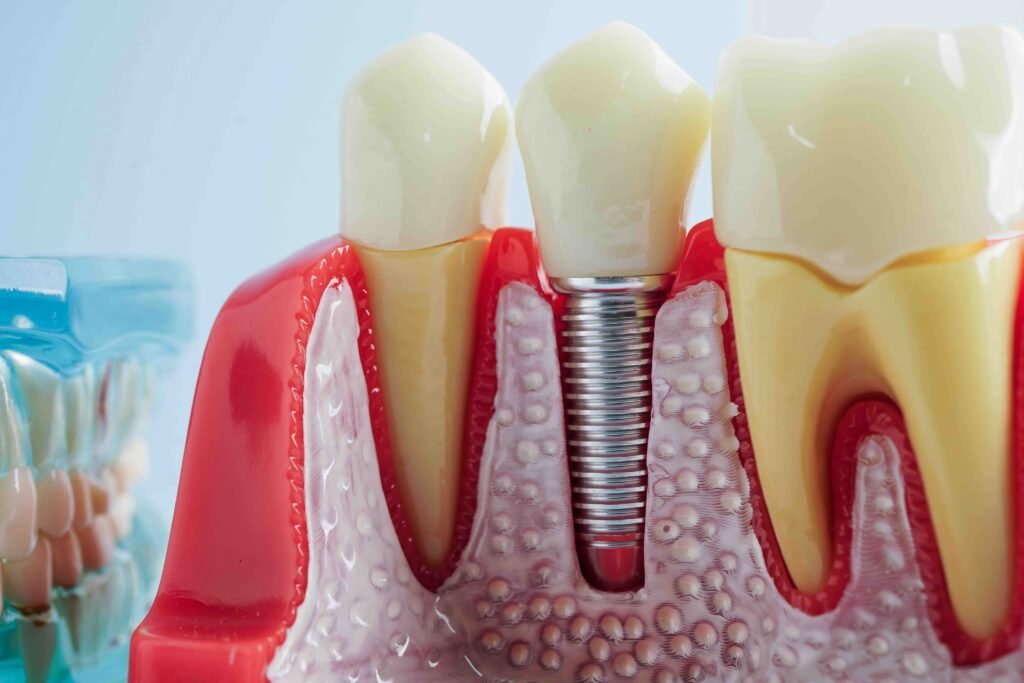
What a Dental Implant Is and How It Works
To truly understand how a dental implant works, it is helpful to start with a simple definition. A dental implant is an artificial root that is inserted into the jawbone to replace the root of a missing natural tooth.
A dental crown — the visible artificial tooth — is then placed on top of this structure.
A dental implant is generally composed of three parts:
- implant: a titanium screw inserted into the bone
- abutment: a connecting component
- crown: the final artificial tooth
The functioning of a dental implant is based on a biological process called osseointegration. This process allows the bone to integrate with the implant, creating a stable and durable structure.
Over time, the bone grows around the implant screw and stabilises it, making it comparable to a natural tooth root. In this way, the new tooth can support chewing forces and integrate with the rest of the teeth.
Dental implants can be used to:
- replace a single missing tooth
- support a dental bridge
- stabilise a full denture
Beyond the aesthetic improvement, implants also play an important role in oral health: they help preserve the jawbone, which tends to shrink over time after tooth loss.
How Dental Implants Are Placed
Many patients want to understand how dental implants are placed before starting treatment. The process usually takes place in several stages.
The first stage involves diagnosis and treatment planning. The dentist evaluates the health of the mouth, the amount of available bone, and the position of the teeth.
At Archway Dental Group Ltd, this stage may include digital tools such as intraoral scanners and digital X-rays, which allow the dental team to analyse the situation with great precision.
The next step is the placement of the implant into the bone. The procedure is performed under local anaesthesia and usually takes a relatively short amount of time.
After placement, the osseointegration phase begins, during which the bone integrates with the implant. This stage is essential because it creates a stable foundation for the new tooth.
Once the implant has fully integrated with the bone, the final dental crown is placed. This crown is designed to match the shape and colour of the natural teeth.
How Long It Takes to Get a Dental Implant
One of the most frequently asked questions concerns how long a dental implant treatment takes.
The overall duration of treatment depends on several factors, including:
- the amount of available bone
- the number of teeth that need to be replaced
- whether preparatory treatments are required
In selected cases, it is possible to place a temporary tooth on the same day as the implant procedure. In other situations, it is necessary to wait until the healing process is complete.
The treatment process may therefore include:
- consultation and treatment planning
- implant placement
- bone healing phase
- placement of the final crown
Overall, the treatment may take several weeks or a few months, depending on the individual characteristics of the patient’s mouth.
Are Dental Implants Painful?
A common concern among patients is: are dental implants painful?
During the procedure, the patient does not feel pain because local anaesthesia is used. The treatment is generally well tolerated, and many patients compare it to other routine dental procedures.
After the procedure, some temporary symptoms may occur, such as:
- mild swelling
- sensitivity in the treated area
- slight discomfort when chewing
These sensations are usually temporary and are part of the normal healing process.
To support proper recovery, it is important to follow the dentist’s instructions, which may include:
- avoiding hard foods in the first few days
- maintaining good oral hygiene
- following any prescribed treatments
Self-treatment or home remedies are not recommended, as they may interfere with the healing process.
How Long Dental Implants Last
Another very common question is how long dental implants last.
Dental implants are designed to be a long-term solution, but their longevity depends on several factors related to oral health and lifestyle habits.
Among the most important factors are:
- daily oral hygiene
- regular dental check-ups
- healthy gums
When properly maintained, dental implants can last for many years. However, just like natural teeth, they require consistent care and attention.
Regular check-ups and professional hygiene appointments are essential for maintaining the results over time and preventing gum problems that could compromise the implant.
Can Dental Implants Be Placed with Periodontitis?
Some patients wonder whether dental implants can be placed if they have periodontitis or other gum problems.
Periodontitis is a disease that affects the gums and the bone supporting the teeth. In these cases, it is necessary to evaluate and treat the gum condition before proceeding with implant treatment.
This is because dental implants require a healthy oral environment in order to integrate properly.
The treatment pathway may therefore include:
- periodontal treatments
- professional hygiene sessions
- monitoring of gum health
Only after the condition has been stabilised can the implant placement be planned.
How a Dental Implant Works: Conclusion
Understanding how a dental implant works helps patients see why this treatment represents an effective solution for replacing missing teeth.
A dental implant recreates a stable artificial root, on which a tooth is placed that is designed to integrate naturally with the rest of the dentition.
The treatment includes several stages, from initial planning to the placement of the final crown, and is always tailored to the individual patient’s needs.
At Archway Dental Group Ltd in Archway, implant treatments are carefully planned using digital technologies and a multidisciplinary approach, with the goal of providing personalised solutions for every patient.
Discussing the topic with your dentist allows for a thorough evaluation of oral health and helps determine whether dental implants may be the most suitable solution for your needs.
📞 +44 02072726818
💬 +44 007766126023
✉️ reception@archwaydentalgroup.co.uk
📍 34 St John’s Way, Archway, London, N19 3RR