Dental implants step by step: from the consultation to the final result
Losing a tooth can change more than your smile. It can affect the way you chew, the way you speak and even how comfortable you feel laughing in front of other people. Many patients who come to see us at Kings Medical Center in Dubai tell us the same thing: they have been thinking about replacing a missing tooth for months, sometimes years, but they have put it off because they did not really know what the treatment involves.
That is completely understandable. When something is unfamiliar, it is natural to feel unsure. This is why we have written this guide: to walk you through dental implants step by step, in simple words, so you know exactly what to expect from the very first appointment until the day you leave the clinic with your new, stable and natural-looking tooth.
In the following chapters, we will explain what dental implants are and why they are considered a long-lasting solution, how the first consultation works, what diagnostic exams are needed, whether everyone can have implants, and how the surgery is carried out. We will also look at what happens during the healing phase, how the final crown is created, why you should never rely on DIY remedies, how to care for your implants over time and what determines the cost of treatment.
Our goal is simple: to help you feel informed, calm and confident before taking this important step for your health.
What are dental implants and why are they a lasting solution?
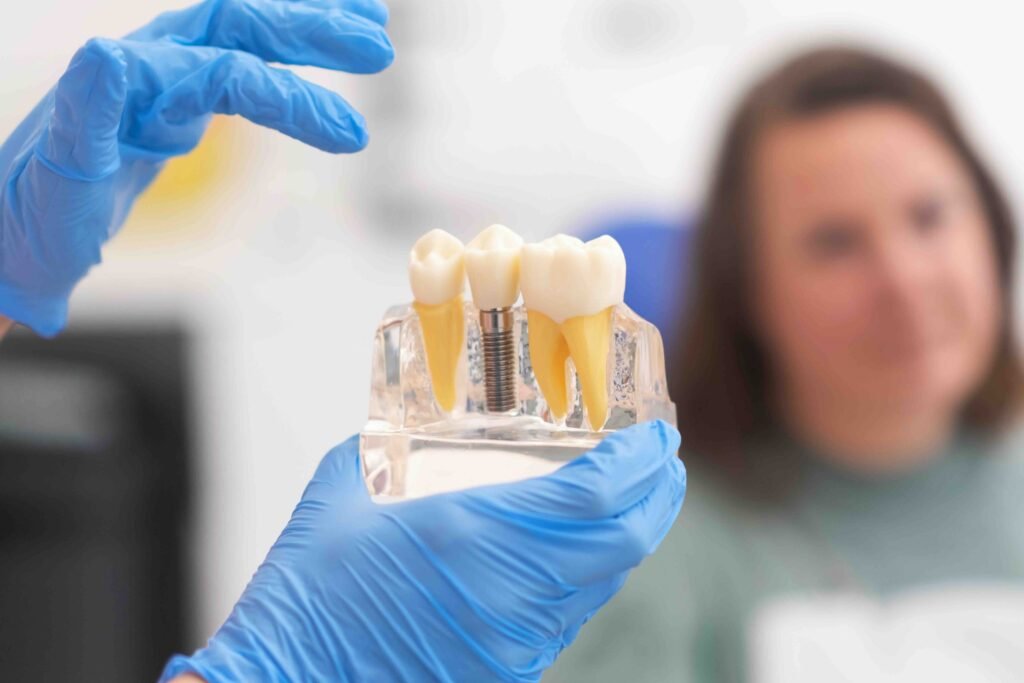
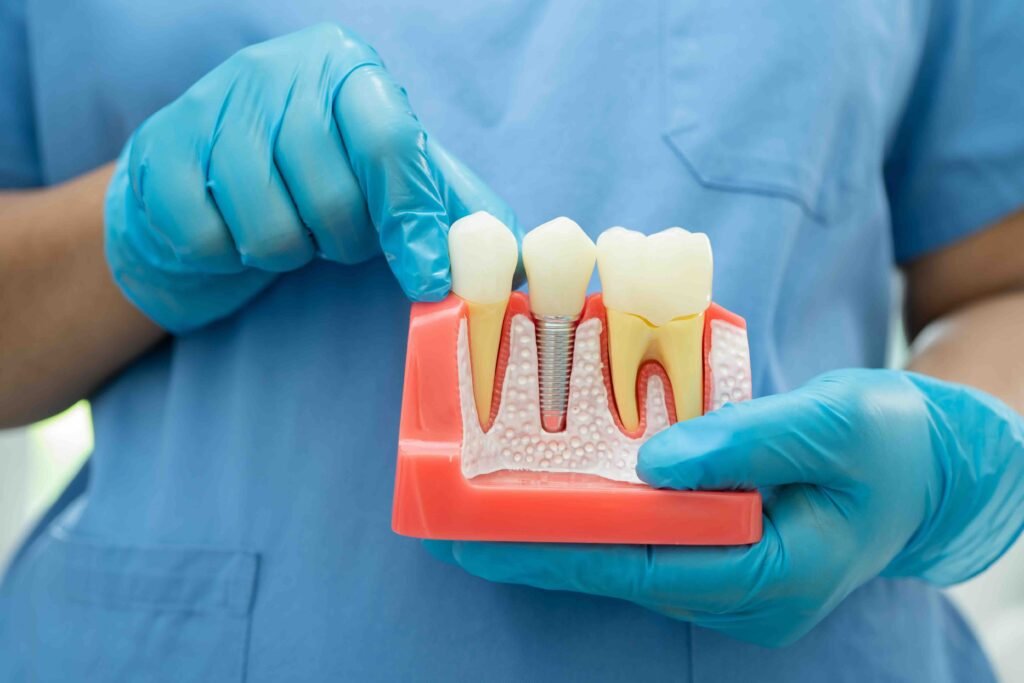
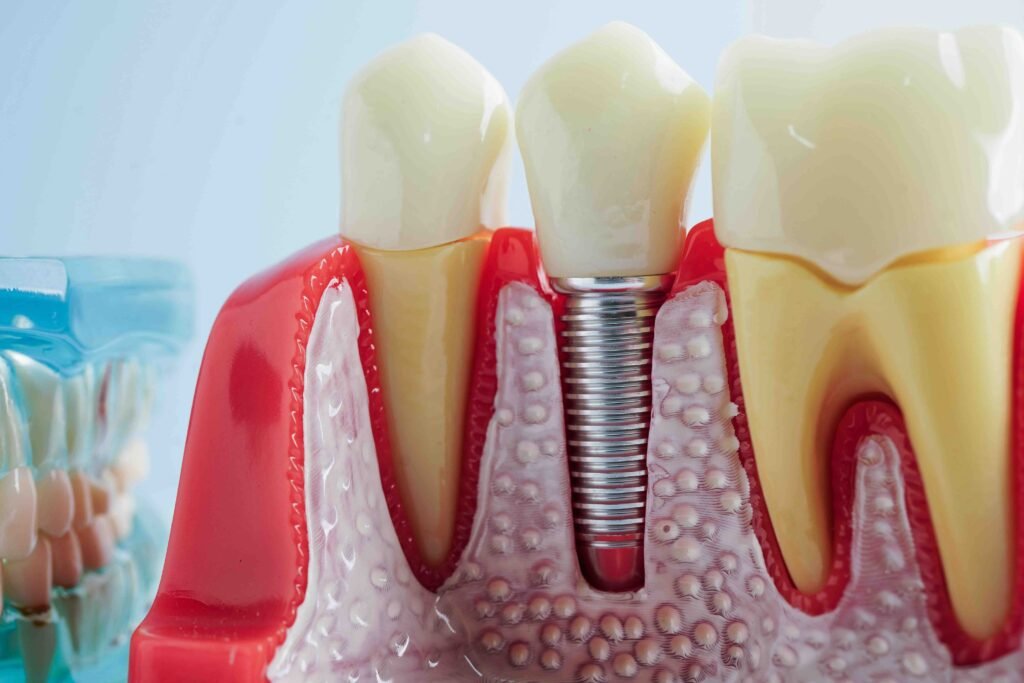
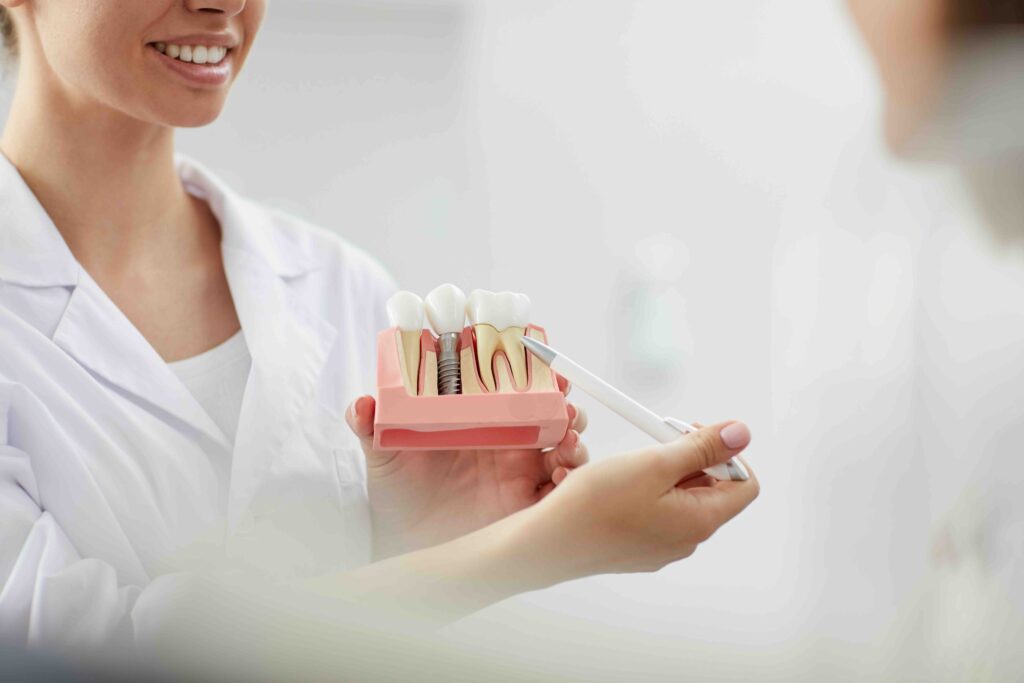
Before looking at the treatment phases, it helps to understand what a dental implant actually is. A dental implant is a small screw, usually made of titanium, that is placed into the jawbone where the natural root of the missing tooth used to be. Titanium is a biocompatible material, which means the body accepts it well and the bone can grow around it and bond with it over time.
A complete implant restoration is made up of three parts:
- The implant: the screw placed in the bone, which acts as the new root.
- The abutment: a small connecting element that links the implant to the visible tooth.
- The crown: the visible part of the tooth, designed to match the shape and colour of your natural teeth.
Think of it a little like a tree: the implant is the root hidden underground, the abutment is the trunk and the crown is what you see above the surface. Because the implant is anchored directly in the bone, the new tooth is firm and stable. It does not move when you eat or speak, unlike some traditional removable solutions.
There is also another important reason why implants are so widely recommended by dentists. When a tooth is missing, the bone underneath it no longer receives the stimulation of chewing. Over time, that area of bone can slowly shrink. This can change the shape of the face and make neighbouring teeth shift into the empty space. An implant helps to preserve the bone, because it transmits chewing forces in a way that is similar to a natural root.
Implants can be used to replace a single tooth, several teeth, or even a full arch. In cases where many teeth are missing, it is possible to use rehabilitations on four or six implants, which support a complete fixed bridge.
Another advantage is that, unlike a traditional bridge, an implant usually does not require the healthy teeth next to the gap to be filed down. This means your natural teeth are respected and preserved.
Of course, every mouth is different. Understanding dental implants step by step starts with knowing that the right solution always depends on a careful assessment of your individual situation, which is exactly what happens during the first visit.
How does the first consultation for dental implants work?
The first consultation is one of the most important moments of the entire journey. This is where your dentist gets to know you, listens to your needs and begins to understand which solution will be right for you. At Kings Medical Center, we believe that good treatment always starts with a good conversation.
When you contact the clinic, our reception team will listen to your request and schedule the appointment with the most suitable doctor. For implant treatments, you will be seen by an expert implantologist, who will follow you throughout the process. Having the same doctor guide you from beginning to end helps build trust and makes communication much easier.
During the consultation, the doctor will:
- Collect your medical history, asking about your general health, any medications you take, allergies, previous surgeries and lifestyle habits such as smoking.
- Listen to your concerns and expectations, for example whether you want to replace a single tooth or restore your whole smile.
- Carry out a clinical examination of your mouth, checking your gums, your remaining teeth, your bite and the area where the implant may be placed.
- Take photographs and scans if needed, to document your starting point.
Your medical history matters more than many patients realise. Some conditions, such as uncontrolled diabetes, certain medications for osteoporosis or blood-thinning drugs, can influence how the treatment is planned. This does not necessarily mean you cannot have implants. It simply means the doctor needs to know so that every step can be adapted safely.
This is also the moment to ask all your questions. No question is too small. Some patients want to know how long the treatment will take, others want to know whether they will be able to work the day after surgery, and many simply want reassurance that they will be comfortable. A good dentist will answer clearly and honestly.
If you are an anxious patient, please tell us. Fear of the dentist is very common, and there is nothing to be embarrassed about. Knowing about it allows us to explain everything calmly, take our time and choose the most comfortable and minimally invasive approach for you.
At the end of this first stage, you will not yet have a final plan, because the doctor will need diagnostic exams to look at what cannot be seen with the naked eye. That is what the next step is all about.
What diagnostic exams are needed before placing a dental implant?
An implant is placed inside the bone, so the doctor needs to see that bone very clearly before planning anything. A visual examination of the mouth is not enough. This is why diagnostic imaging is an essential part of dental implants step by step.
At Kings Medical Center, the clinic is equipped with several digital technologies that make this phase faster and more precise:
- Digital radiography, which provides detailed images of individual teeth.
- Panoramic X-ray, which shows the whole mouth in a single image, including both jaws, the roots of the teeth and the surrounding structures.
- 3D Cone Beam CT (CBCT), a three-dimensional scan that shows the height, width and density of the bone.
- Intraoral scanner, which creates a precise digital impression of the teeth without the use of traditional impression materials.
The 3D scan is particularly valuable. Imagine trying to hang a heavy shelf on a wall without knowing where the pipes and cables are. You might drill in the wrong place. In the same way, the CBCT allows the implantologist to see important structures such as nerves and the maxillary sinus, and to measure exactly how much bone is available. This makes it possible to choose the correct size and position of the implant.
Having the CBCT directly in the clinic also means you do not need to go to a separate radiology centre. The exam can be done during your visit, and the doctor can look at the images straight away. This helps to speed up the planning and avoids unnecessary trips.
The intraoral scanner is appreciated by many patients because it replaces the traditional impression trays filled with paste. Instead, a small wand captures thousands of images of your mouth and creates a 3D digital model in just a few minutes. It is quick, clean and comfortable, especially for people who tend to gag easily.
Once all the information has been collected, the doctor studies the case carefully. In some situations, a multidisciplinary approach is useful. For example, if your teeth are misaligned, an orthodontist may be involved, or if the aesthetic result is particularly important, the treatment may be designed together with colleagues who work on cosmetic dentistry. Thanks to the presence of different experts under one roof, this coordination happens naturally.
At the end of this phase, the doctor will explain the personalised treatment plan to you: how many implants are needed, which technique will be used, the expected timeline and every available option.
Can everyone have dental implants?
This is one of the questions patients ask most often, and the honest answer is: most adults can, but a careful evaluation is always needed. Being a good candidate depends on several factors, and each of them is checked during the diagnostic phase.
Here are the main elements the doctor will consider:
- Bone quantity and quality: the implant needs enough healthy bone to be stable.
- Gum health: active gum disease must be treated before implant placement.
- General health: some medical conditions need to be stable and under control.
- Habits: smoking, for example, can slow down healing and increase the risk of complications.
- Age: implants are generally placed once the jaw has finished growing, so they are not usually suitable for young teenagers.
What happens if there is not enough bone? Many patients worry that they have been “without a tooth for too long” and that it is now too late. In reality, modern dentistry offers several solutions. Bone regeneration is a procedure that helps rebuild the bone in areas where it has been lost, using grafting materials that encourage the body to form new bone.
In the upper jaw, the back teeth are located close to the maxillary sinus, an air-filled space above the roots. When a tooth has been missing for a long time, the bone in this area can become very thin. A maxillary sinus lift gently raises the floor of the sinus and creates space for new bone, so that an implant can then be placed safely.
These procedures may sound complex, but they are well established and are carried out regularly by expert implantologists. They may, however, add some time to the overall treatment, because the new bone needs to mature before the implant can be loaded.
Patients with diabetes, heart conditions or other chronic illnesses can often still receive implants, provided their condition is well managed. In some cases, the implantologist may want to coordinate with your general doctor.
Smokers are not automatically excluded, but they should know that smoking reduces blood flow to the gums and can interfere with healing. Your dentist will strongly advise you to stop or reduce smoking, at least around the time of surgery, to improve your chances of long-term success.
The key message is this: never assume you are not suitable for implants before having a proper consultation. Only a complete evaluation can tell you what is possible in your specific case.
How is dental implant surgery performed?
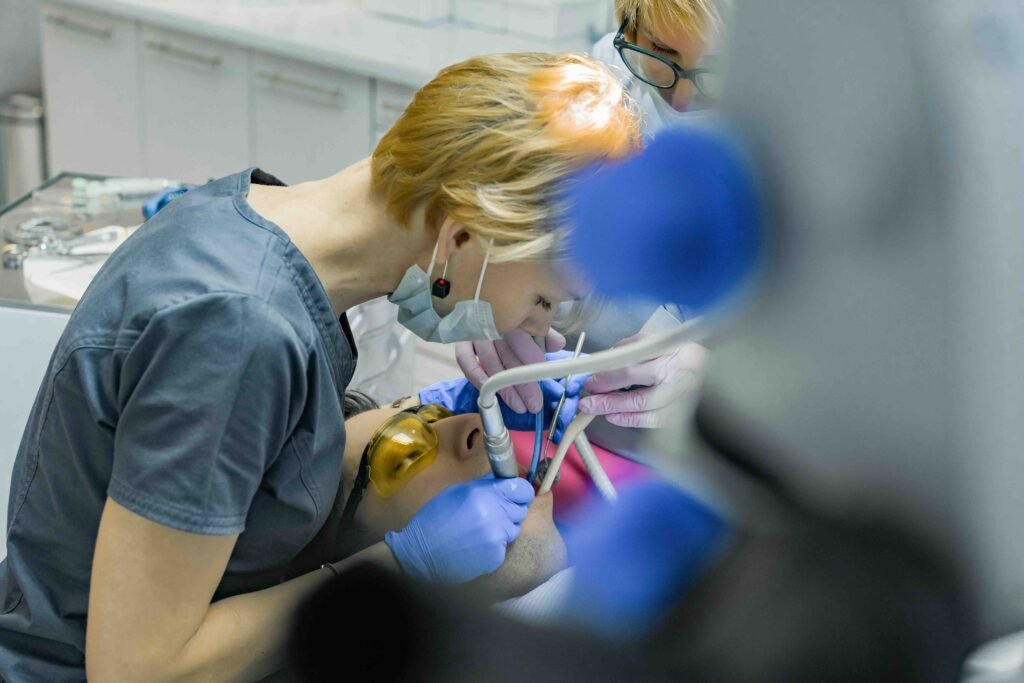
For many people, the word “surgery” is the most worrying part of the whole process. The good news is that implant placement is a routine procedure that is usually performed under local anaesthesia, just like a filling or an extraction. You are awake but the area is completely numb, so you should feel pressure and vibration rather than pain.
Thanks to the planning carried out with the 3D scan, the procedure can be precise and efficient. At Kings Medical Center, the implantologist can use different techniques depending on your situation:
- Computer-guided surgery: the implant position is planned on the computer using the CBCT data. A custom surgical guide is then produced, which fits over your teeth and shows the doctor exactly where and at what angle to place the implant.
- Flapless surgery: in suitable cases, the implant is placed through a very small opening in the gum, without the need to lift a gum flap. This is a minimally invasive technique that can reduce swelling and discomfort after surgery.
- Traditional technique: in other cases, the gum is gently opened to give the doctor a clear view of the bone, and then closed with a few stitches.
The procedure itself usually follows these stages:
- The area is anaesthetised.
- The doctor prepares a small site in the bone, following the plan.
- The implant is carefully inserted.
- A healing cap or a temporary tooth is placed, depending on the chosen protocol.
- If needed, the gum is closed with a few stitches.
The time needed varies. A single implant can often be placed in about an hour, while more complex cases take longer.
If a tooth still needs to be removed, the extraction can sometimes be done on the same day as the implant placement. This is called immediate implantation, and whether it is possible depends on the condition of the bone and the absence of infection.
After the surgery, it is normal to experience some swelling, mild discomfort or slight bleeding for a few days. Your dentist will give you clear post-operative instructions and, if necessary, prescribe medication to keep you comfortable. Most patients are able to return to their normal daily activities within a day or two.
Remember: every step of dental implants step by step is designed to make you feel safe. If something worries you, tell your doctor. Understanding what is happening is often the best way to feel calm.
What happens during the healing phase and osseointegration?
Once the implant has been placed, a very important biological process begins: osseointegration. This word simply means that the bone grows around the implant and bonds with its surface, until the implant becomes a firm part of the jaw, much like a natural root.
This process cannot be rushed. It generally takes a few months, and the exact time depends on several factors, including the quality of your bone, the area of the mouth and whether bone regeneration was needed. Bone in the lower jaw is often denser and may heal a little faster than bone in the upper jaw.
You may wonder whether you will have to walk around with a gap during this time. In most cases, the answer is no. There are different options to keep your smile complete while you heal:
- Immediate loading: in suitable cases, a temporary fixed tooth or bridge can be attached to the implant within a very short time after surgery. This is possible when the implant has excellent initial stability in the bone.
- Temporary removable solutions: in other cases, a provisional removable tooth can be used for aesthetic reasons until the final restoration is ready.
Immediate loading is particularly appreciated by patients who need to replace front teeth or a full arch, because it allows them to leave the clinic with fixed teeth in a much shorter time. However, it is not suitable for everyone, and the decision is always made by the implantologist based on clinical criteria, never only on convenience.
During the healing phase, there are some important rules to follow:
- Eat soft foods and avoid chewing hard or sticky foods on the treated side.
- Keep the area clean, following the hygiene instructions your dentist gives you.
- Avoid smoking and alcohol, especially in the first days.
- Attend all follow-up appointments, so the doctor can check that healing is going well.
Even with temporary teeth, the implant needs to be protected from excessive forces while the bone is still bonding. Biting into very hard foods too early could disturb the process.
Follow-up visits allow the doctor to remove stitches if present, check the gums and, when the time comes, confirm that osseointegration has been completed successfully. Only then can the final phase of the journey begin.
How is the final crown made and placed?
This is the moment many patients look forward to most: receiving their final tooth. Once the implant is firmly integrated in the bone, the dentist moves on to the prosthetic phase, which is all about function and aesthetics.
First, the dentist takes a precise impression of the implant and surrounding teeth. At Kings Medical Center, this is often done with the intraoral scanner, which creates an accurate digital model without the discomfort of traditional impression materials. The digital data is used to design the abutment and the crown with great precision.
The crown is designed to:
- Match the colour of your natural teeth, so that it blends in perfectly.
- Follow the shape of your neighbouring teeth and the proportions of your face.
- Fit your bite, so that chewing forces are distributed correctly.
When the aesthetic result is especially important, for example for front teeth, digital tools such as Digital Smile Design can help plan the final appearance. This allows the doctor to show you a preview of how your smile could look, so you can share your opinion before the final crown is made.
The materials used are chosen for their strength and natural look. High-quality ceramics reflect light in a way that is very similar to natural enamel, so your new tooth does not look artificial.
When the crown is ready, the doctor will check its fit, colour and contact with the opposing teeth. Small adjustments may be made to make sure your bite feels completely natural. Then the crown is fixed in place, either cemented or screwed onto the abutment, depending on the chosen design.
Many patients describe this moment as a real turning point. After weeks or months of treatment, they can finally bite, chew and smile with confidence again. Some say they quickly forget which tooth is the implant, because it feels just like their own.
For patients who received a rehabilitation on four or six implants, this phase involves the placement of a full fixed bridge, which replaces the entire arch and restores both appearance and chewing ability.
Completing dental implants step by step with care and patience is what allows the final result to be not only beautiful, but also stable and long-lasting.
Why should you avoid DIY remedies and shortcuts?
Online, it is easy to find videos and posts promising quick fixes for missing or damaged teeth: home-made temporary teeth, mouldable plastic kits, adhesive products used to stick a broken tooth back in place, or “natural” remedies to calm infections. As dentists, we strongly advise against all of these solutions.
Here is why:
- They do not treat the cause. A missing tooth is not only an aesthetic problem. It affects the bone, the bite and the position of the other teeth. A DIY product may hide the gap, but it does nothing to protect your mouth.
- They can damage healthy tissues. Ill-fitting materials can irritate the gums, trap bacteria and cause inflammation or infection.
- They can delay proper treatment. The longer a gap is left untreated, the more bone may be lost, which can make future implant treatment more complex.
- They are not sterile or controlled. Products used inside the mouth should be biocompatible and placed by a professional.
The same applies after implant surgery. Some patients are tempted to rinse with strong home-made solutions, apply heat to the area or take medication without advice. These choices can interfere with healing. For example, applying heat to a swollen area can sometimes make swelling worse, and some aggressive rinses can irritate delicate healing gums.
Another common mistake is ignoring warning signs. If you notice persistent pain, swelling that increases instead of decreasing, fever or a bad taste in the mouth after surgery, do not try to manage it alone. Contact your dentist so the situation can be checked promptly.
Finally, be cautious of shortcuts in treatment itself. A dental implant is a medical procedure that requires careful planning, accurate diagnostic imaging, a sterile environment and an experienced doctor. Choosing a clinic based only on speed or convenience, without verifying the quality of care, can expose you to unnecessary risks.
At Kings Medical Center, our approach is based on ethical, responsible dentistry. This means recommending treatment only when it is truly needed, explaining every option honestly and always putting your long-term health first. A safe and effective implant treatment, guided by an expert, is always the best solution for your smile.
How should you care for dental implants over time?
An implant cannot develop tooth decay, but this does not mean it does not need care. The gums and bone around the implant can become inflamed if plaque builds up, a condition known as peri-implantitis. If left untreated, it can lead to bone loss around the implant and, in the worst cases, to the loss of the implant itself.
The good news is that taking care of an implant is very similar to taking care of natural teeth. Here are the most important habits:
- Brush twice a day with a soft toothbrush, paying particular attention to the area where the crown meets the gum.
- Clean between the teeth every day using dental floss, interdental brushes or a water flosser, as recommended by your dentist or hygienist.
- Avoid smoking, which is one of the main risk factors for implant complications.
- Limit very hard foods, such as ice or hard sweets, which can damage both natural teeth and crowns.
Regular check-ups are essential. Your dentist will usually recommend professional hygiene sessions at regular intervals. At Kings Medical Center, professional cleaning can be carried out with AirFlow and GBT technology, which uses fine powders and water to gently remove plaque and stains, including around implants, in a comfortable way.
If you grind or clench your teeth, especially at night, tell your dentist. This habit, called bruxism, places strong forces on teeth and implants and can damage the crowns over time. A custom night guard can help protect your smile.
During check-ups, the doctor will examine the gums around the implant, check the stability of the crown and, when needed, take X-rays to monitor the bone. Detecting small problems early makes them much easier to manage.
Think of your implant as a long-term investment in your health. Just as you service a car regularly to keep it running well, regular care and professional maintenance help your implant last for many years. With good habits and regular visits, many implants continue to function well for decades.
How much do dental implants cost?
It is natural to want to know the cost of treatment before starting. However, it is not possible to give a single answer that applies to everyone, because the cost of dental implants depends on many factors and can vary from patient to patient based on their individual situation.
Some of the elements that influence the treatment plan include:
- The number of teeth to be replaced: a single implant is very different from a full-arch rehabilitation.
- The condition of the bone: if bone regeneration or a sinus lift is needed, the treatment becomes more complex.
- The technique chosen: for example, computer-guided surgery or immediate loading.
- The type of final restoration: a single crown, a bridge or a full fixed prosthesis.
- Any preliminary treatments: such as extractions, gum treatment or professional hygiene.
For this reason, a visit is always necessary. Only after the consultation and the diagnostic exams can the implantologist define a personalised treatment plan and explain each step clearly, including the related costs.
At Kings Medical Center, we believe in transparency. During the visit, the doctor will go through your treatment plan with you in detail, so you understand what each phase involves and can make an informed decision without pressure. Our team can also give you information about available payment methods and the clinic’s direct agreements with several health insurance providers.
The most important thing is not to let uncertainty stop you from getting the information you need. A consultation gives you a clear picture of your situation and the options available to you.
Dental implants step by step: conclusion
Replacing a missing tooth is a decision that brings real benefits to your health, your comfort and your confidence. As we have seen, the journey of dental implants step by step includes several phases: the first consultation and medical history, accurate diagnostic exams with 3D imaging, careful treatment planning, implant placement with modern and minimally invasive techniques, the healing phase and osseointegration, and finally the placement of the crown that completes your smile.
Each step has a precise purpose, and following them carefully is what allows the final result to be stable, natural and long-lasting. Avoiding DIY remedies, following your dentist’s advice and keeping up with regular check-ups are all part of protecting your investment over time.
At Kings Medical Center, in the heart of Deira in Dubai, our international and multidisciplinary team guides every patient with experience, honesty and care, from the first conversation to the final result.
If you would like to find out whether dental implants are the right solution for you, contact our clinic and book an appointment. We will be happy to listen to you, answer your questions and help you take the first step towards a complete, healthy smile.