Can dental implants be done in one day? This is a common question among patients who would like to replace missing teeth while reducing treatment times and the number of appointments required. At Alnoor Medical Center in Ras Al Khaimah, implant treatment is planned according to each patient’s individual clinical situation, using digital diagnostic technologies and an approach focused on comfort, precision and careful treatment planning. Patients searching for a Dental implant in Ras Al Khaimah may therefore encounter concepts such as immediate loading, computer-guided implantology and full-arch rehabilitation, but it is important to understand what these terms actually mean.
Receiving an implant and having teeth restored quickly may be possible in selected situations, but “in one day” does not mean that every phase of implant treatment is completed permanently within a few hours. Implantology involves biological healing processes that continue after the procedure, particularly the integration of the implant with the surrounding bone. For this reason, the starting point is always an accurate assessment of the mouth, bone and individual treatment requirements.
Can dental implants be done in one day for every patient?
The short answer is not necessarily. Same-day implant treatment can be considered when the clinical conditions allow an implant to be placed with sufficient stability and when the surrounding tissues provide an appropriate foundation for the planned restoration. The decision cannot be made simply on the basis of a patient’s preference for faster treatment, because implantology must respect biological and anatomical conditions that vary considerably from person to person.
Before planning immediate loading, the dentist needs to assess several elements, including the amount and quality of available bone, the condition of the gums and surrounding tissues, the position of the missing tooth or teeth and the way the upper and lower teeth come together. General health and individual risk factors are also part of the evaluation. At Alnoor Medical Center, the first assessment can include clinical examination, radiographs, panoramic imaging and 3D scans when indicated, allowing the treatment plan to be explained according to the patient’s specific situation.
This is why two people with apparently similar missing teeth may receive different treatment plans. One may be suitable for implant placement and a provisional restoration within a short period, while another may first require bone regeneration or another preparatory procedure. Treatment speed should never take priority over appropriate clinical planning, and there is no safe do-it-yourself method for determining whether a person is suitable for immediate implant loading.
What does a same-day dental implant actually mean?
The expression “same-day implant” can sometimes create the impression that the entire treatment, from implant placement to the definitive teeth, is completed in a single appointment. In clinical practice, however, it commonly refers to an immediate loading protocol, in which an implant or a group of implants is placed and a provisional restoration is connected within a short time when the necessary conditions are present.
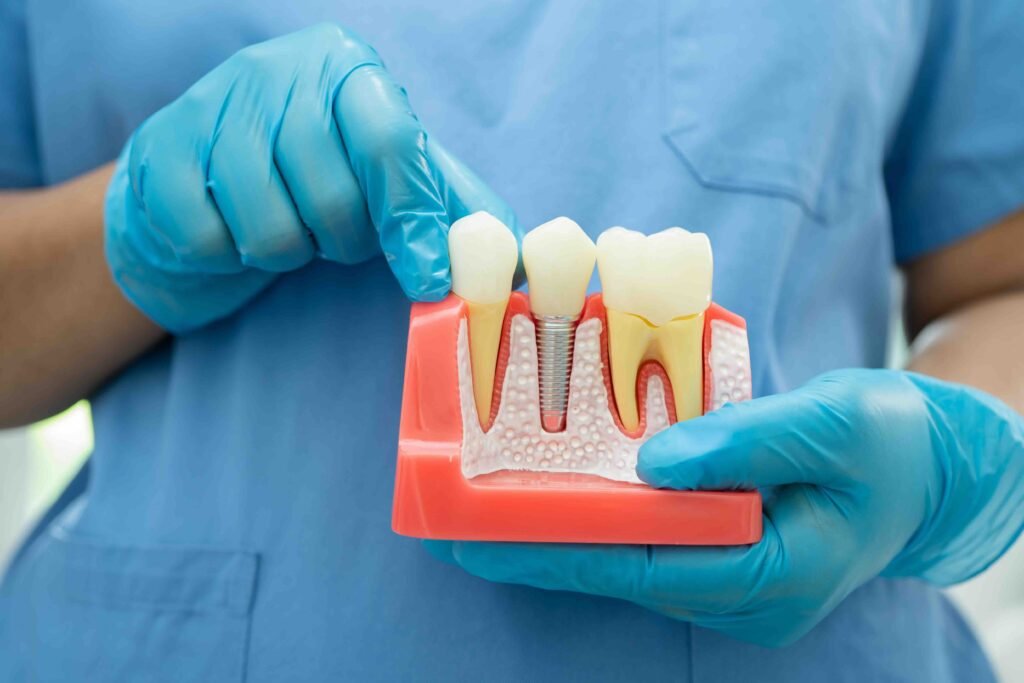
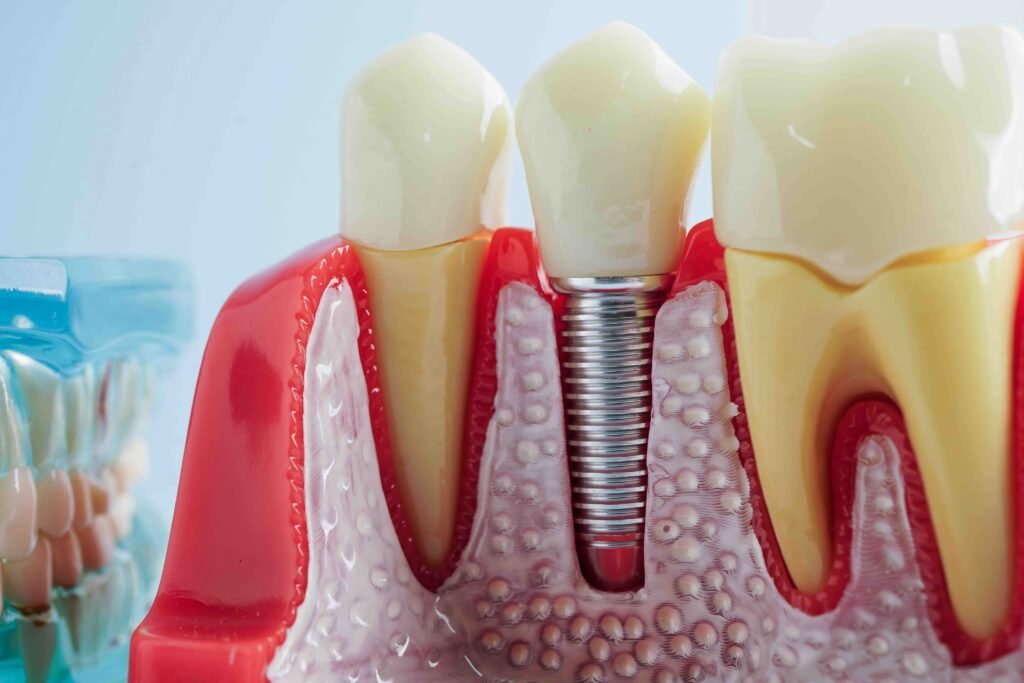
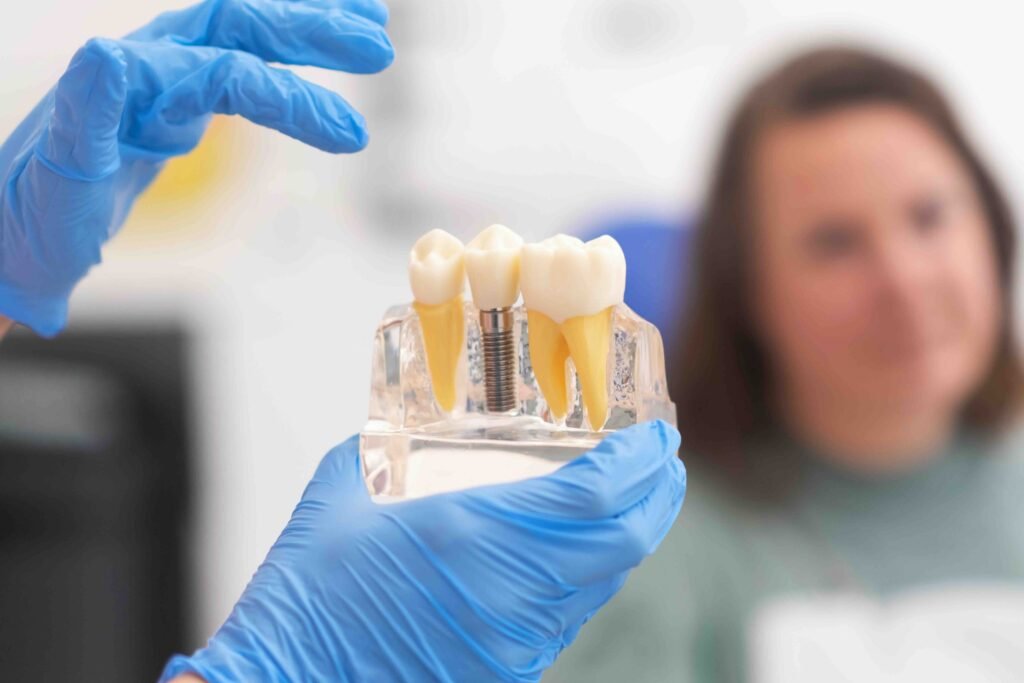
The implant itself is the component positioned in the jawbone to support the future restoration. Even when a provisional tooth can be provided quickly, the biological process known as osseointegration still takes place over time. During this phase, the bone heals around the implant and contributes to its long-term stability. A provisional restoration therefore has a different role from the final prosthetic restoration and may need to be managed carefully while healing progresses.
Alnoor Medical Center includes immediate loading among its implantology treatments, together with rehabilitation on four or six implants, computer-guided procedures, flapless techniques, bone regeneration and maxillary sinus lift procedures. The appropriate protocol depends on the diagnosis rather than on a standard formula applied to every patient.
How does the dentist decide whether immediate loading is possible?
A successful implant treatment begins well before the implant is actually placed. Clinical and radiographic assessment helps the dentist understand the anatomy of the jaw and identify factors that may influence implant positioning. Three-dimensional imaging can provide detailed information about bone dimensions and important anatomical structures, while digital planning can help establish the intended position of the implant in relation to the future tooth.
Alnoor Medical Center has technologies including 3D Cone Beam CT, intraoral scanning, digital radiology and Digital Smile Design, alongside other diagnostic and clinical equipment. These tools can contribute to a treatment plan based on the individual anatomy and restorative requirements of the patient.
When evaluating immediate loading, the clinician also considers the stability obtained when the implant is inserted. This is particularly important because the implant must remain adequately stable while the surrounding bone begins its healing process. If the conditions found during assessment or surgery are not appropriate for immediate loading, choosing a more conventional healing protocol may be preferable. In other words, the final decision may depend both on pre-operative planning and on clinical findings during treatment.
Why is bone quality important for same-day implants?
Bone is one of the central factors in implant dentistry because an implant needs an appropriate biological and mechanical environment. Having sufficient bone is not simply a question of quantity: its dimensions, characteristics and location in relation to anatomical structures all influence treatment planning. When a tooth has been missing for a long time, the surrounding bone may also have changed, which can affect the available options.
In some cases, additional procedures may therefore be considered before or alongside implant placement. Alnoor Medical Center includes bone regeneration and maxillary sinus lift among the procedures associated with its implantology services. These treatments can be relevant when the existing anatomy does not provide the conditions required for the planned implant rehabilitation.
Patients should consequently avoid assuming that a faster protocol is automatically preferable. Attempting to bypass necessary diagnostic or healing stages would work against the objective of implant treatment. The safest approach is to determine what the tissues actually require and then establish the appropriate sequence. This is particularly relevant for anyone researching a Dental implant in Ras Al Khaimah, as the possibility of immediate treatment can only be established after an individual assessment.
Can several missing teeth be replaced in one day?
The same-day concept is not limited to replacing a single tooth. Implant dentistry can also be used to rehabilitate patients who are missing several teeth or who require a more extensive restoration. Depending on the condition of the mouth and jawbone, a prosthetic rehabilitation may be supported by multiple implants positioned strategically across the dental arch.
Alnoor Medical Center provides rehabilitation supported by four or six implants, as well as immediate loading when clinically appropriate. In these situations, planning becomes particularly important because the implants need to work together to support the provisional restoration while the tissues heal. The position and stability of each implant, the distribution of chewing forces and the design of the restoration all need to be considered.
Patients should also understand that receiving a provisional set of teeth rapidly does not eliminate the subsequent phases of care. Healing needs to be monitored, oral hygiene remains essential and the prosthetic phase may evolve as tissues stabilise. Same-day treatment describes the timing of specific clinical stages, not the end of the biological healing process.
What happens after an immediately loaded implant?
After implant placement, the body begins a natural healing process around the implant. During this period, following professional instructions is important because excessive or inappropriate forces may interfere with the conditions required for healing. The patient may therefore receive guidance concerning oral hygiene, diet and the way the provisional restoration should be used during the initial phase.
Follow-up appointments allow the dentist to evaluate healing, tissue response and implant stability. Alnoor Medical Center also uses photobiomodulation in connection with implant procedures to support healing and osseointegration as part of its clinical implantology protocols. This is one example of how implant care can extend beyond the surgical appointment itself.
Home remedies cannot accelerate osseointegration or replace professional follow-up. Products or techniques promoted online as ways to speed up implant healing should not be used without clinical advice. Maintaining careful oral hygiene and respecting the instructions provided after surgery are more appropriate ways to support the healing environment.
Why are computer-guided techniques used in implant treatment?
Digital technologies can help clinicians study the relationship between the available bone, the future restoration and nearby anatomical structures before treatment. In computer-guided implantology, information obtained from diagnostic imaging can be incorporated into the planning process so that implant positioning is considered in advance according to the clinical situation.
Alnoor Medical Center lists both computer-guided and flapless implant procedures among its implantology options. A flapless approach may be considered in appropriate cases, but it is not automatically suitable for every patient. The choice depends on anatomy, bone availability, treatment objectives and the clinician’s assessment.
Technology therefore supports clinical decision-making rather than replacing it. The objective is not simply to make treatment faster, but to collect useful information and plan each stage with greater precision. This distinction is particularly important when discussing same-day procedures, where careful planning and appropriate case selection remain fundamental regardless of the technology available.
Can dental implants be done in one day? The importance of a personalised assessment
So, Can dental implants be done in one day? In selected clinical situations, implant placement and immediate provisional restoration may be possible, including more extensive rehabilitations supported by multiple implants. However, the suitability of immediate loading depends on individual factors such as bone conditions, implant stability, oral health, anatomy and the type of restoration required. A same-day protocol should therefore be viewed as one possible treatment pathway rather than a solution that applies automatically to every patient.
At Alnoor Medical Center, implantology is approached through individual assessment, digital diagnostics and personalised treatment planning. The clinic’s implant services include immediate loading, computer-guided procedures, flapless implantology, bone regeneration and rehabilitation supported by four or six implants, with the treatment sequence selected according to each patient’s clinical needs. Understanding these factors with the dental team during an initial evaluation can help clarify whether an immediate-loading approach is appropriate for the individual case.
📞 +971 72288451
💬 +971 72288451
✉️ info@alnoordental.com
📍 8th Floor, Al Naeem Tower 3, Etisalat Street, Ras Al Khaimah, United Arab Emirates